If you arrived on this page because you have native seeds from me, you can read on for detailed information about them: how to sow them, how to identify, and see some photos of some of the plants and native pollinators.
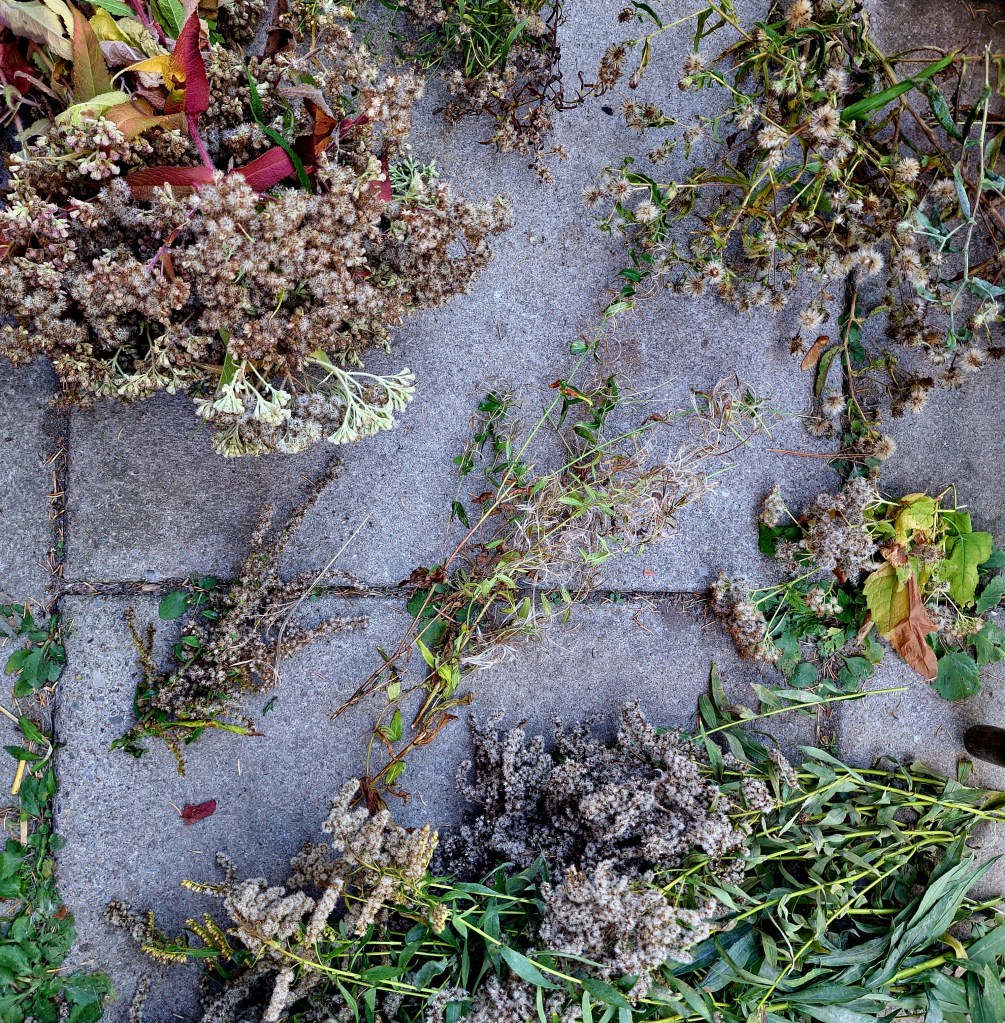
Below are the seeds in the packets created for the VON as well as friends and family. If you received an UNLABELLED packet from me, well, may the odds be ever in your favour.
Anise Hyssop (smells like licorice, native bees adore)
Bee Balm (red plants attract birds, so expect hummingbirds in time!)
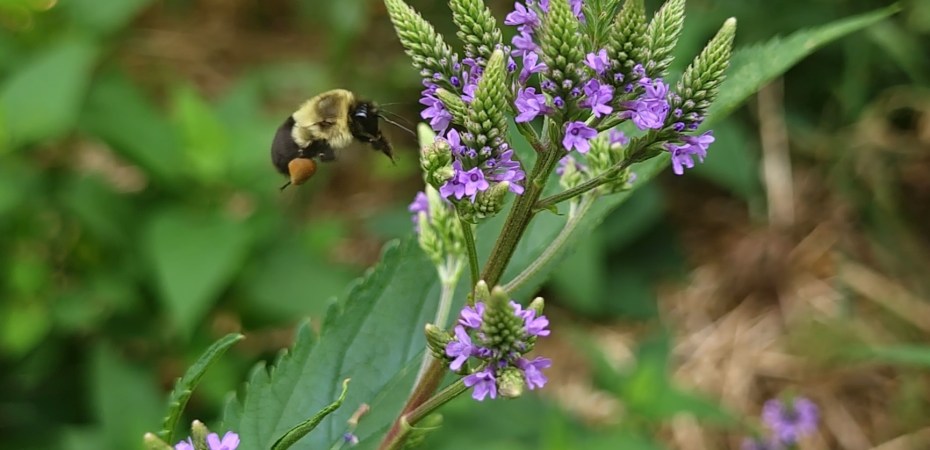
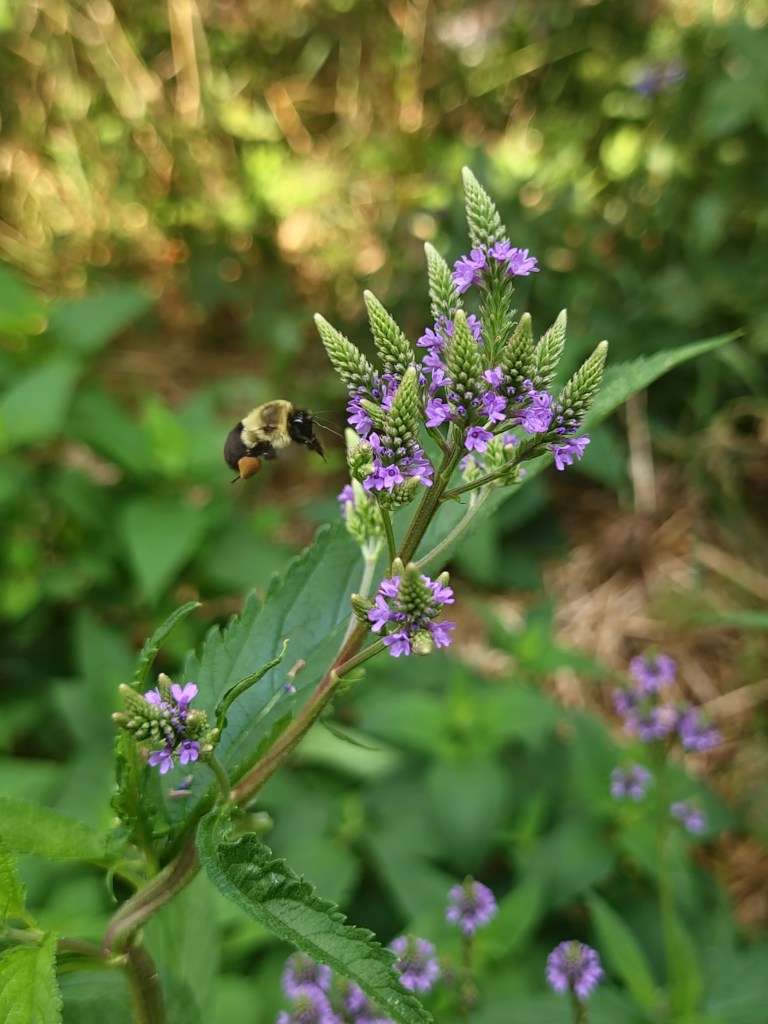
Blue Vervain (and truly adaptable plant, it took in every corner I sowed it)
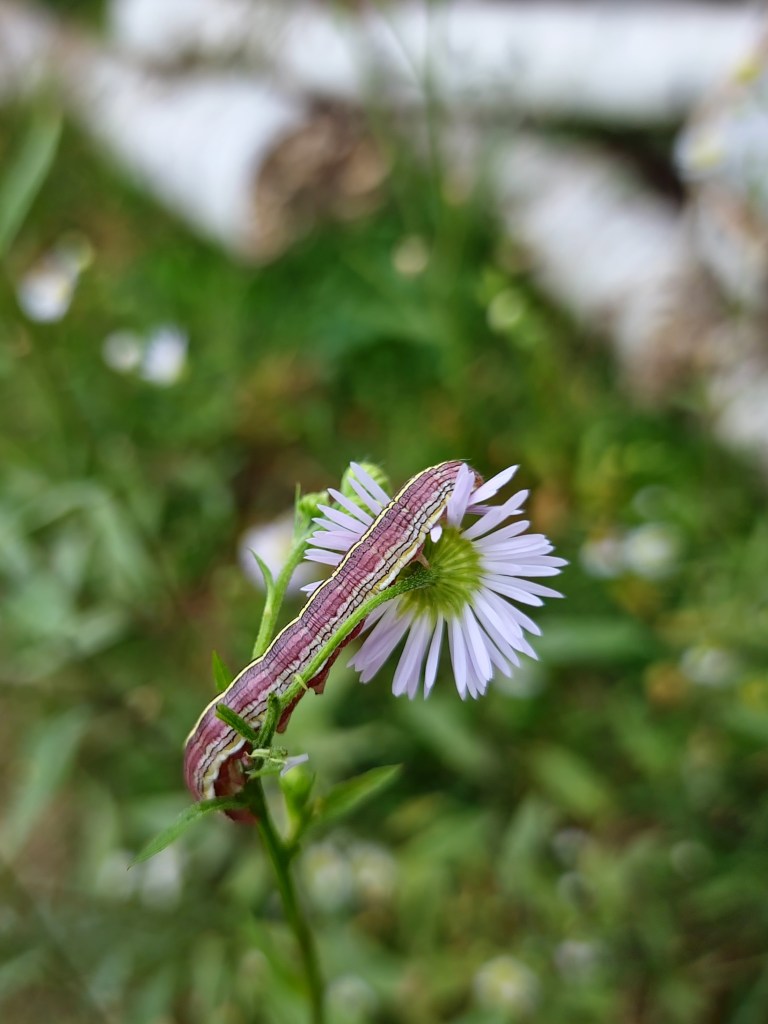
Fleabane (a favourite of native caterpillars and very happy to spread by seeds on the wind)
Hoary Skullcap (a beautiful purple plant, reminiscent of a tiara)
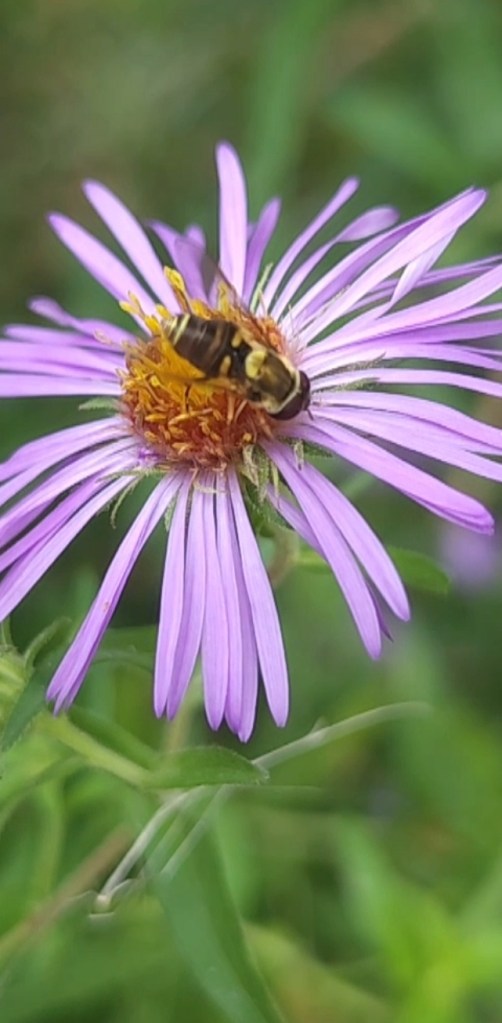
New England Aster (the powerhouse of the yard, absolutely amok with pollinators)
Sneezeweed (not an allergen! Also known as Helen’s Flower)
Swamp Aster (a cheerful, subtler aster)
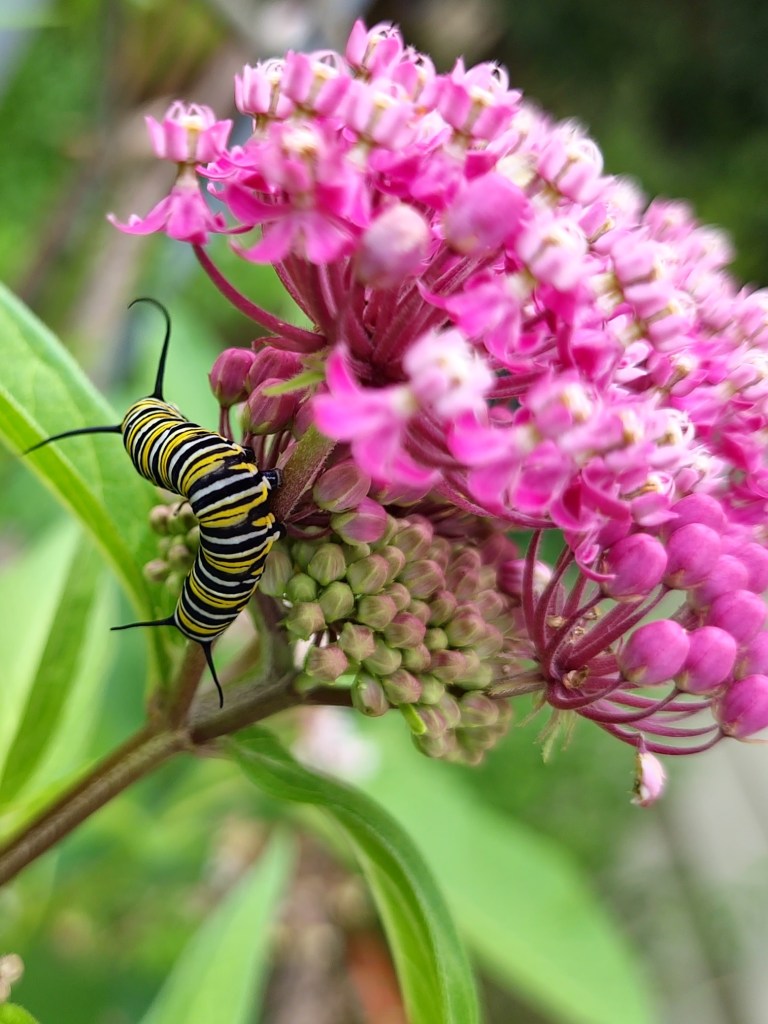
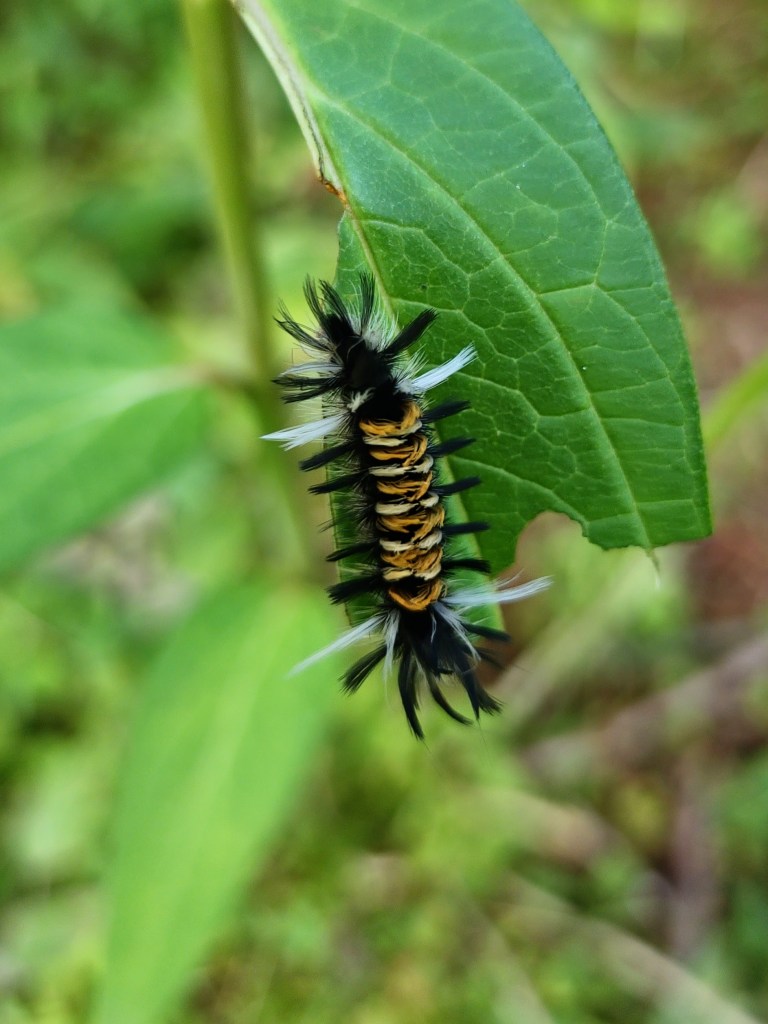
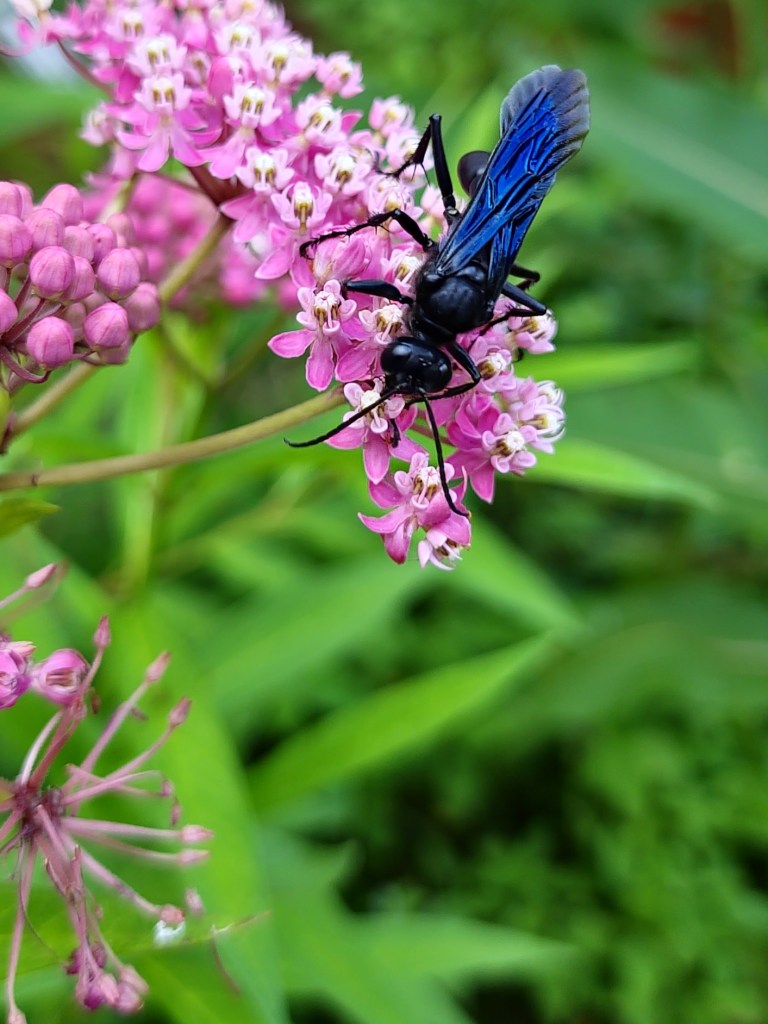
Swamp Milkweed (aka Rose Milkweed, not to be missed! Will explode with life, smells like fruit loops)
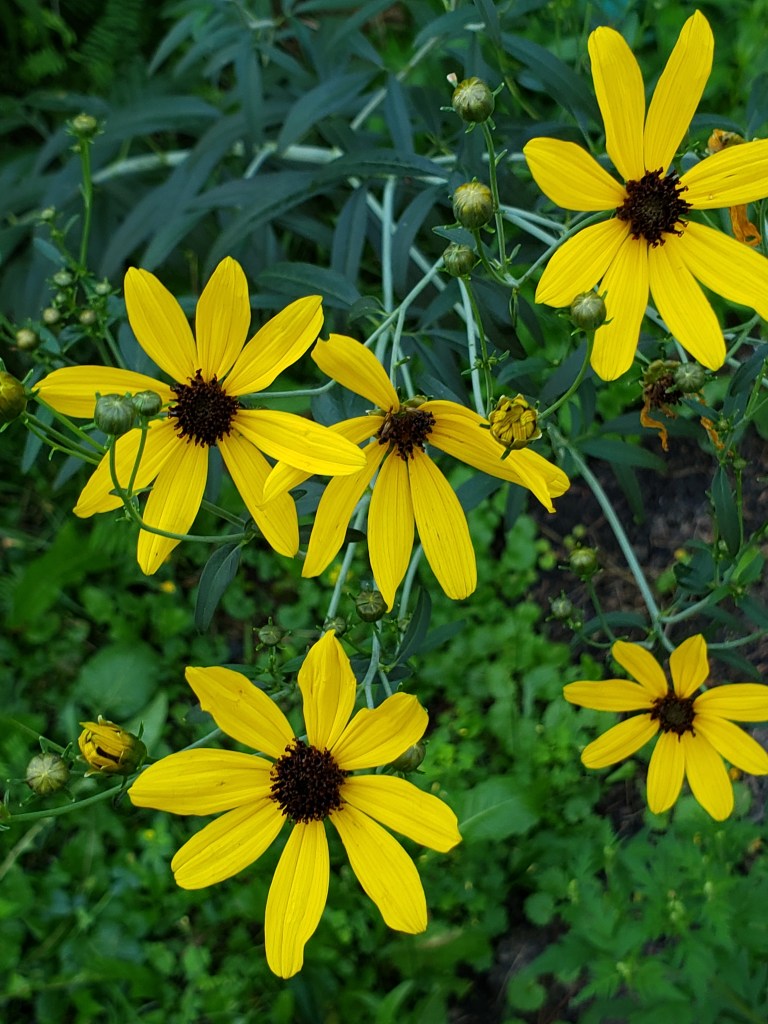
Tall Coreopsis (a very cheery tall yellow flower; foliage becomes red in fall, very appreciated)
These Ontario native plants were vigorous seeders, had plenty of attention from pollinators and other native insects, and they are all tough perennials for your garden. The seed bundle is perfect for between 1 and 4 winter sowing jugs (more below). You can also sow these by broadcasting them directly onto the snow, in a promising spot.
None of the seeds in the package will spread by rhizome or create colonies. These are prolific bloomers and create many seeds to collect, share, and expand your garden, Again, year three is when you can really focus on the seeds. Until then, enjoy the plants! I use PlantNet to identify, but a low-certainty guess should be ignored – more data is required so upload another photo when it’s grown a bit..
All these plants will do well in full sun, with part sun producing fewer and slower blooms. They aren’t picky and most will grow where planted. Don’t expect all seeds to germinate, nor to flower the first year! With native plants, the adage is, Year 1 they creep, Year 2 they sleep, and Year 3 they leap! And I have found this to be true. If you don’t see a lot of growth above the soil, rest assured it’s happening below. Even if the seeds don’t fully cold-stratify, it’s very likely you’ll see them the next year, if sown somewhere habitable.
CAVEAT!
I am a backyard hobbyist, not a botanist, not an expert. There MAY be native seeds in your pack that are not listed above; however, I tried hard to keep them separate from aggressive natives like Obedient Plant, Tall Goldenrod, Purple Flowering Raspberry, and others. I will try to have photos of all the plants soon, but some are below.
WINTER SOWING METHOD
Collect 4L jugs
Cut in half, leaving ‘hinge’
Make drainage holes in bottom
Fill halfway with potting soil
Wet soil
Sprinkle seeds densely
Pat down small seeds, lightly cover larger seeds
Secure upper half to lower half with twist-tie or string
Put outside in area that will get rain and snow
Avoid South-facing and afternoon sun
Ignore until spring
Watch moisture levels as they sprout and grow
If entangled, put clump into water and tease apart
Plant into garden any time, keep watered but let it struggle
Alternatively, repot into larger containers (as singles or small clumps)
and plant into soil in the fall
 kathleenmay.ca